Gap Assessment vs Internal Audit: What’s the Difference?
Gap Assessment vs Internal Audit: Which One Does Your Organization Need?
This guide explains the differences between an ISO 27001 gap assessment and an internal audit, when each should be performed, and how both activities contribute to stronger Information Security Management Systems and improved certification readiness.
Organizations working toward ISO/IEC 27001 certification often encounter two important activities early in their implementation journey: the gap assessment and the internal audit. Although the terms are sometimes used interchangeably, they serve different purposes within an Information Security Management System (ISMS).
Understanding the distinction helps organizations plan implementation more effectively, prioritize improvement efforts, and prepare for certification with greater confidence. While only one of these activities is specifically required by ISO/IEC 27001, both provide valuable insight into the effectiveness of an organization’s information security program.
This guide explains what gap assessments and internal audits are, how they differ, when each should be performed, and why many organizations benefit from incorporating both into their ISO 27001 implementation strategy.
What Is a Gap Assessment?
An ISO 27001 gap assessment is a structured review that compares an organization’s current Information Security Management System against the requirements of ISO/IEC 27001. The objective is to identify missing controls, incomplete documentation, implementation weaknesses, and opportunities for improvement before a formal certification audit begins.
Gap assessments are commonly performed during the early stages of implementation, but they also provide value after significant business changes, technology upgrades, acquisitions, or regulatory developments. They help organizations understand their current maturity and prioritize the work needed to achieve compliance.
Rather than determining whether an organization already conforms to the standard, a gap assessment focuses on identifying what still needs to be addressed before certification.
If your organization is preparing for certification, a professional ISO 27001 Gap Assessment can help identify implementation priorities and reduce avoidable audit findings.
What Is an Internal Audit?
An ISO 27001 internal audit is a formal evaluation of an organization’s Information Security Management System to determine whether it conforms to ISO/IEC 27001 requirements and whether it is operating effectively.
Unlike a gap assessment, an internal audit is a mandatory requirement of ISO/IEC 27001 before certification. It provides objective evidence that the Information Security Management System has been implemented, maintained, and is capable of supporting continual improvement.
During an internal audit, auditors typically review documentation, interview personnel, examine records, evaluate implemented controls, verify risk treatment activities, and identify nonconformities or opportunities for improvement.
Organizations seeking independent audit support can benefit from experienced ISO 27001 Internal Audit services to improve audit readiness before certification.
Gap Assessment vs Internal Audit
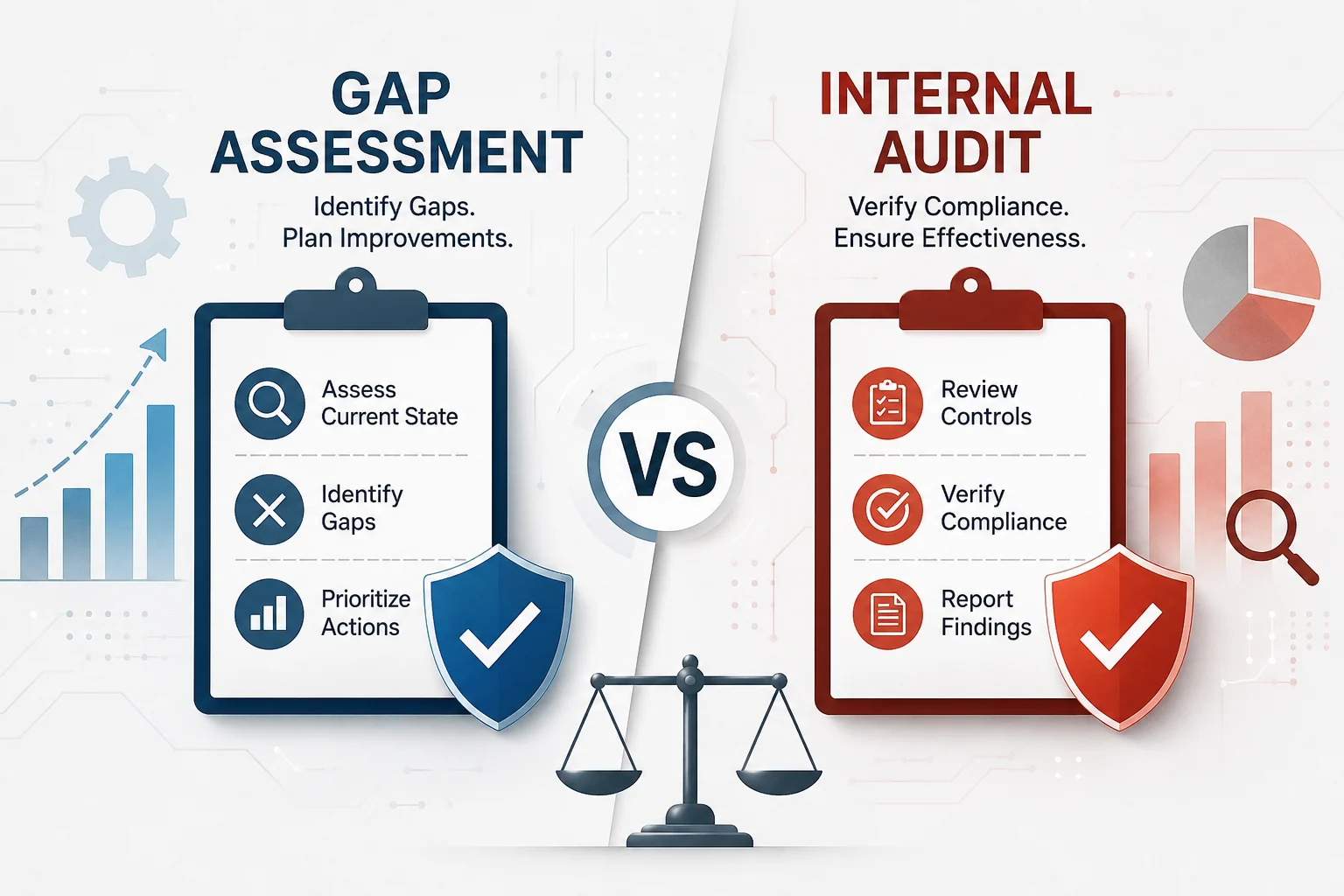
Although both activities evaluate an Information Security Management System, they are designed to achieve different objectives. Understanding these differences allows organizations to apply each activity at the appropriate stage of implementation.
The comparison below highlights the key distinctions.
| Gap Assessment | Internal Audit |
|---|---|
| Identifies implementation gaps and missing controls. | Evaluates conformity with ISO/IEC 27001 requirements. |
| Optional but considered a best practice. | Required before certification. |
| Typically performed before or during implementation. | Performed after implementation is substantially complete. |
| Produces an implementation roadmap. | Produces audit findings and corrective action recommendations. |
| Focuses on preparation and improvement. | Focuses on verification and continual improvement. |
Do You Need Both?
For many organizations, the answer is yes. Although only the internal audit is required by ISO/IEC 27001 before certification, a gap assessment provides valuable insight much earlier in the implementation process.
A gap assessment helps identify weaknesses before they become audit findings, allowing organizations to prioritize improvements, allocate resources effectively, and avoid unnecessary delays during certification preparation.
Once the Information Security Management System has been implemented, the internal audit provides an objective evaluation of whether policies, procedures, controls, and supporting evidence meet the requirements of ISO/IEC 27001 and are operating effectively.
Using both activities creates a more structured implementation approach, reducing risk while improving confidence ahead of the certification audit.
When Should Each Be Performed?
The value of both activities depends largely on timing. Performing each at the appropriate stage helps organizations gain the greatest benefit from the process.
A gap assessment is typically performed when:
- Planning an ISO/IEC 27001 implementation project.
- Reviewing an existing Information Security Management System before certification.
- Preparing after significant organizational or technology changes.
- Assessing readiness before investing in a formal certification audit.
An internal audit is typically performed when:
- The Information Security Management System has been implemented.
- The organization is preparing for certification.
- Periodic internal audits are due as part of continual improvement.
- Major organizational or operational changes require verification of continued conformity.
Following this sequence enables organizations to address implementation issues early while maintaining ongoing confidence in the effectiveness of their Information Security Management System.
If you’re planning an implementation project from the ground up, understanding the ISO 27001 Framework provides helpful context for how gap assessments, internal audits, risk assessments, and continual improvement fit together.
Key Takeaways
- Gap assessments and internal audits serve different but complementary purposes.
- A gap assessment identifies implementation gaps before formal certification activities begin.
- An internal audit is a mandatory ISO/IEC 27001 requirement before certification.
- Both activities strengthen audit readiness and support continual improvement.
- Organizations that use both are typically better prepared for successful certification audits.
If your organization is planning ISO/IEC 27001 implementation or preparing for certification, professional consulting support can simplify the process and help identify opportunities for improvement before formal audits begin.
Talk to an ISO 27001 Consultant →